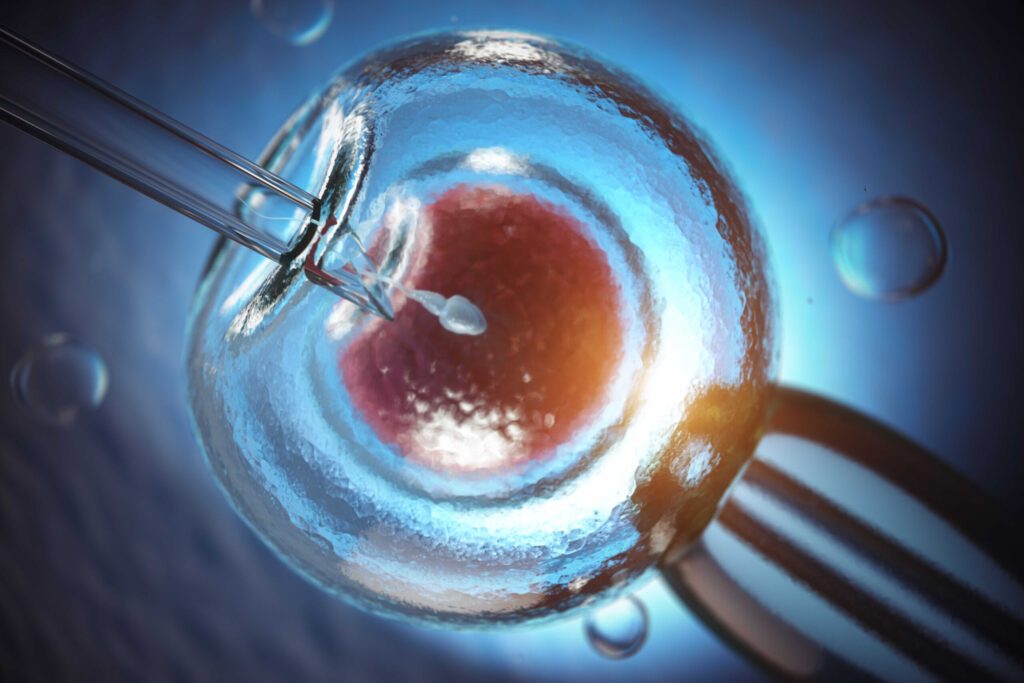
For around half of heterosexual couples who are having problems conceiving, the cause of infertility is sperm-related. Intracytoplasmic sperm injection (ICSI) is one of the most advanced fertility treatments available today for couples experiencing male infertility.
Unlike conventional IVF, where sperm and eggs are mixed in a dish for natural fertilisation, ICSI bypasses this by allowing a single healthy sperm to be injected directly into an egg, increasing the chances of fertilisation in cases where sperm motility, quality or quantity are a concern.
According to NICE guidelines for infertility ICSI is recommended for couples where:
-
There is severe male factor infertility
-
Previous IVF cycles have resulted in low or failed fertilisation
-
Sperm has been retrieved surgically (from the testicles or epididymis)
You can find out more about the types of male fertility challenges ICSI is a good fit for, as well as the costs and risks involved in our blog What is ICSI?. But if you're considering ICSI as part of your fertility treatment, understanding the factors that influence its success rates can help you feel more informed and prepared as you navigate the process, so read on.
What Affects ICSI Success Rates?
Success rates for ICSI depend on a variety of factors, including maternal age, embryo quality and underlying fertility issues.
1. Female Age
The most significant factor influencing IVF success rates (including ICSI) is maternal age. Younger women particularly those under 35 tend to produce higher-quality eggs, leading to better embryo development and implantation success. As a woman's age increases, the number of viable eggs decreases, and the chances of successful fertilisation drop accordingly.
2. Sperm Quality
Although ICSI can overcome many sperm-related barriers, the success rate of ICSI may be lower when male fertility issues are more pronounced. Severely damaged sperm may still fail to fertilise an egg or lead to poor embryo development. If male infertility is severe, such as in cases of azoospermia (no sperm), the success of ICSI may depend on the availability of sperm for collection, often requiring surgical extraction. Although ICSI can overcome many sperm-related barriers, including low sperm count or high levels of antibodies in the semen, the success rate of ICSI may be lower when male fertility issues are more pronounced.
3. Egg Quality
The quality of the eggs being used also has a direct impact on the outcome of the procedure. Healthy, high-quality eggs have a higher chance of being successfully fertilised with ICSI. In women with conditions like polycystic ovary syndrome (PCOS) or diminished ovarian reserve, egg quality can vary and may affect the chances of successful fertilisation.
4. Embryo Quality & Freezing Embryos
Once the sperm is injected into the egg, the resulting embryo's development is another critical factor. The embryo's health, including its genetic makeup, can impact its ability to implant and develop into a pregnancy. Embryo screening, such as preimplantation genetic testing (PGT),can be an option for some people to help ensure the best chance of success. If multiple...