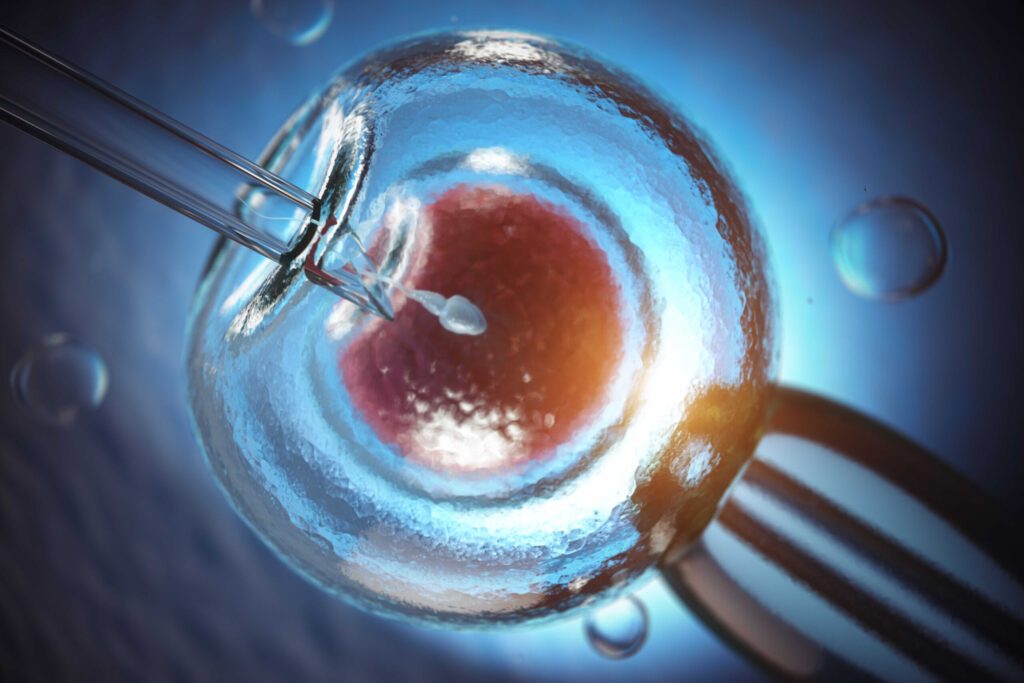
The chance of having a twin pregnancy increases considerably with IVF.
In this blog, we will explore why IVF is more likely to result in multiple births than with natural conception, the difference in the way that identical twins and non-identical twins are created, the risks associated with a twin pregnancy and factors to consider before going through the IVF process.
Why is a twin pregnancy more likely with IVF?
Historically, more than one embryo was transferred during IVF, to increase the chances of a successful pregnancy. However, if both/all of the embryos implanted successfully and developed as normal, then multiple births occurred.
Also, with IVF, ovulation is stimulated to produce more mature eggs.
As technology and awareness have increased, however, it’s now more possible to identify the strongest potential embryo, thus increasing the chances of a successful birth, with just one embryo transferred. This is proving a more popular option with specialists, in order to avoid the risks involved with multiple pregnancies and births.
Why are some twins identical?
Where 2 foetuses develop simultaneously, the babies are called twins, whether they are identical or non-identical.
Identical twins come from the same embryo, which has split into 2 parts, creating 2 identical embryos. They contain the same genetic information, so naturally they will be of the same sex and look identical to each other.
Non-identical twins come from 2 different eggs and 2 different sperm, they don’t have to be the same sex and may look as alike as other siblings, rather than identical.
Having IVF treatment significantly increases the chance of having non-identical twins, but may also offer a slightly increased chance of having identical twins too.
What are the risks associated with a twin pregnancy?
With multiple births, there is a greater risk of maternal and foetal complications.
Possible complications include:
- A higher risk of anaemia and pre-eclampsia, which can put the mother and the babies at risk
- Gestational diabetes – this produces a larger than normal baby, who may go on to develop longer-term health complications
- Premature birth can lead to miscarriage, still birth or ongoing health complications for the baby
- The need for a C-section delivery of one or both of the babies can create a greater risk for the mother
- With 2 babies developing in the mother simultaneously and with the risk of going to full term with twins, many twins tend to be born earlier than 39 weeks and with a low birth weight, which can lead to serious ongoing medical conditions, as babies and continuing as they grow up, depending on the condition.
- In more rare cases, where twins share a placenta, twin-twin transfusion may occur, which affects the blood flow between the babies and puts both twins at risk.
As well as the possibility of any of the complications above, you may also experience excessive mood swings, fatigue and nausea, as a result of expecting twins.
However, it’s important to remember that healthy twins are successfully delivered...